
Why Drone Mapping Has Become the Preferred Tool for Erosion Control Monitoring
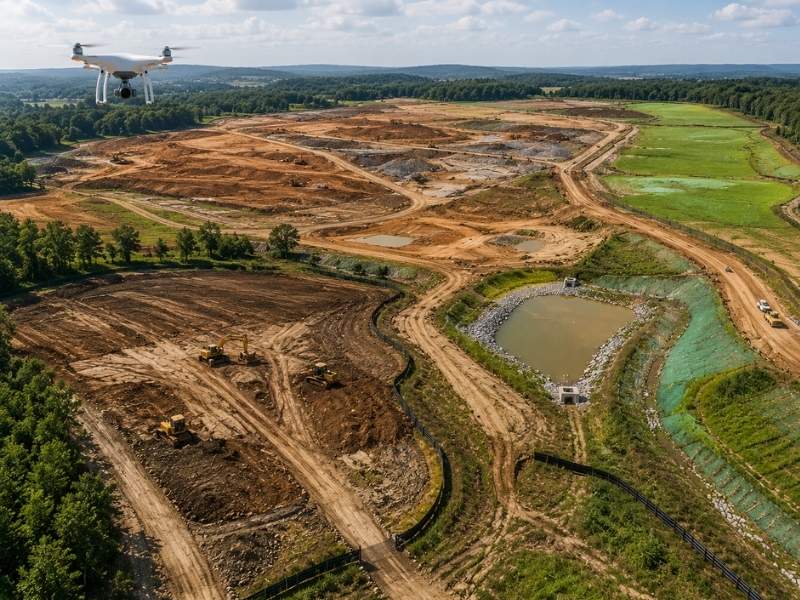
Keeping up with a construction site is harder than most people think. Soil moves after rain. Grading changes where water goes. Bare ground spreads as crews open up new areas. Erosion control monitoring used to mean walking the site, writing notes, and hoping nothing slipped through. Drone mapping changed that. Project teams now use drone surveys to get a clear, steady picture of site conditions without spending days on the ground. Here’s why so many teams now reach for drones first.
How Drone Mapping Provides Repeatable Data for Erosion Control Monitoring
Ground inspections are only as good as the person doing them. Two inspectors walking the same site on different days will notice different things, flag different problems, and write different reports. That makes it hard to compare what they found from one visit to the next.
Drone mapping cuts out that problem. Each flight follows the same path and collects data the same way, every time. The map from the third survey works just like the map from the first. Teams can set two maps side by side and see what actually changed, not just what one person happened to notice.
That steady record also helps during reviews. When someone asks how the site looked six weeks ago, the answer isn’t a pile of handwritten notes. It’s a map.
Why Drone Mapping Helps Teams See the Full Picture of Erosion-Prone Areas
A slope alone doesn’t cause erosion. The problem starts when a slope sends water into an unprotected drainage path that cuts across bare soil near a control that stopped working. Those connections are hard to spot from the ground, especially on a large site where one crew works the north end and another works the south.
Aerial maps put all of that in one view. Teams can see how the land drops into drainage paths, where bare soil sits near water flow, and whether their controls cover the right spots. That full-site view makes it much easier to find gaps before they become real problems.
It also helps when teams need to explain the risk to someone who hasn’t walked the site. A map is quicker than a long field report.
How Drone Mapping Gets Teams Current Site Info Faster
After a heavy rain, site conditions can shift fast. Drainage paths move, silt fences fail, and sediment flows into areas that were clean the day before. Getting that information quickly matters, because waiting a week for a field report means a week of problems going unchecked.
A drone covers a large area in one flight. The maps and models are ready to look at much sooner than a traditional walkthrough would allow. Teams don’t have to wait for a full inspection to find out what changed.
That speed also helps the whole team stay in sync. When a project manager can share fresh site images within hours of a storm, everyone responds together instead of working off old information.
How Drone Mapping Keeps Monitoring Consistent Across Big Job Sites
Large construction projects rarely have just one work zone. Clearing crews work one area while grading crews work another, and both spots need erosion control attention at the same time. Without a set method, some zones get careful checking and others get a quick look.
Drone mapping uses the same process for every part of the site on every survey date. No zone gets more attention than another based on who happened to walk through it. Every active area gets mapped, checked, and reviewed on the same schedule.
That steady approach also makes it easier to manage subcontractors. When everyone knows the whole site gets documented by drone, there’s less room for gaps to go unnoticed. Checking conditions becomes a shared routine across the project, not something that falls on whoever is closest.
Why Drone Mapping Helps Teams Track How a Site Performs Over Time
A construction project moves through stages, and erosion risks look different at each one. Clearing creates bare soil fast. Grading changes where water drains. Final stabilization raises its own questions about what’s holding and what isn’t. Tracking all of that used to mean patching together notes from different inspectors written months apart.
Saved drone maps make that comparison easy. Teams can pull up maps from the clearing stage and set them next to maps from the grading stage to see exactly what changed and where. If a drainage problem shows up later, the saved maps often show where it started.
That record also helps at the end of a project. A full aerial history of site conditions from start to finish gives teams solid documentation for final review and sign-off.
Frequently Asked Questions
Why is drone mapping becoming the preferred tool for erosion control monitoring?
Drone mapping covers more ground faster than walking a site and produces the same type of data every time. It gives project teams a reliable picture of conditions without long field collection efforts, which makes monitoring easier to manage on large sites.
How does drone mapping help teams see erosion-prone areas more clearly?
Aerial maps show the whole site at once, including slopes, drainage paths, bare soil and existing controls. That full view helps teams see how different parts of the site connect, which is hard to do from the ground on a large construction project.
Can drone mapping produce consistent data across an entire construction project?
Yes. Each flight follows the same collection method, so data from early surveys and later surveys comes from the same process. That makes it possible to compare maps directly and see real changes rather than just differences in what someone noticed.
How does drone mapping help with long-term erosion control tracking?
Saved aerial maps let teams look back at how site conditions changed at each project stage. That record helps teams see where erosion issues started, check how controls held up over time, and put together solid documentation for project closeout.
What makes drone mapping different from traditional site monitoring?
Traditional monitoring relies on inspectors walking sections of a site and writing down what they find. What gets noticed varies by person and by which areas they reach. Drone mapping covers the whole site the same way on every flight, which gives a more complete and more reliable record of conditions.
