
How Drone LiDAR Mapping Helps Review Sloped or Wooded Land Before Design
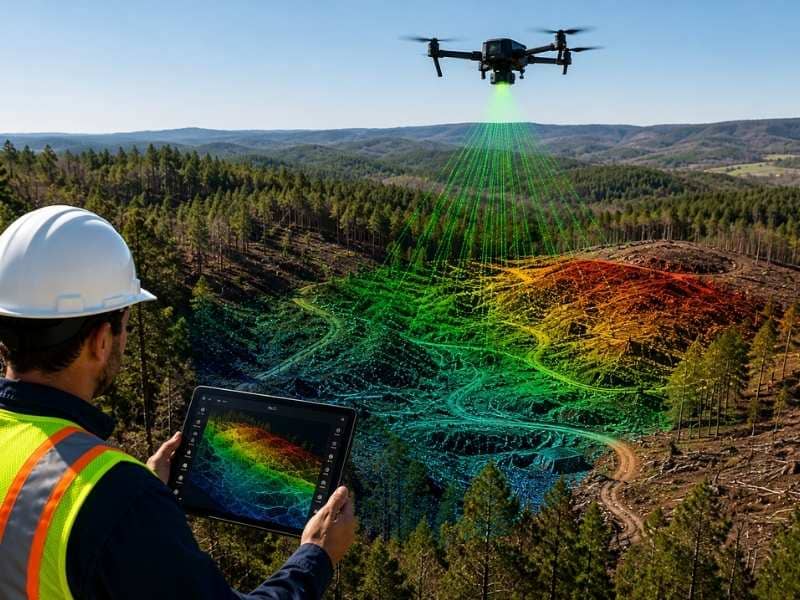
Drone LiDAR mapping gives design teams a clear look at land. This land would otherwise stay hidden. Thick trees, brush, and uneven ground can hide the true shape of a property. This kind of mapping uses laser pulses sent from a drone. The pulses measure the ground below all that cover. The result is a detailed picture of slopes and dips. It also shows other features. This happens long before any design work starts. This information helps owners and design teams make better decisions from the start.
Drone LiDAR Mapping Helps Show What Is Under Thick Trees
Trees and thick brush can hide what the ground looks like underneath. A property might have a steep drop hidden from view. It might also have a ditch nobody can see from above. Drone LiDAR mapping solves this problem in a different way. The laser pulses pass through small gaps in the leaves and branches. Enough of them reach the ground below. This builds an accurate picture of the terrain. The method works even on land covered in heavy brush. It also works under a thick tree canopy. Walking the same land on foot would take far longer. It would still miss small details.
Hills and Low Spots Are Easier to Find Before Design Starts
Uneven land can change where a home, road, or other feature should go. A hill in the wrong spot can block a planned driveway. A low spot can collect water in the wrong place. That spot might be right where a building was supposed to sit. Drone LiDAR mapping shows these slopes and low areas clearly. It does this before any plans get drawn. Design teams can see the real shape of the land. They no longer have to guess from a flat map. This early information helps teams place each feature in a spot that works.
Large Country Lots Can Be Studied Without Walking Every Acre
Many large country lots stretch across acres of open and wooded ground. Walking every part of a property like this takes a full day or more. Drone LiDAR mapping covers the same ground from the air. It does this in a fraction of the time. A drone can fly over the entire property at once. It collects data on every section along the way. Owners get a full picture of the land. They do not have to spend days walking through brush and uneven terrain. This makes it easier to study a large property before making any decisions.
Good Land Data Can Help With Future Building Plans
Clear elevation data gives owners and design teams a strong starting point. They can see exactly where the land rises, falls, and levels out. This information supports decisions about where to place a home, road, or other structure. Plans built on solid land data are less likely to need changes later. A design built on guesswork often runs into a surprise. That surprise usually shows up once construction starts. Drone LiDAR mapping removes much of that guesswork. It does this before the first decision gets made.
Drone LiDAR Mapping Can Be Useful for More Than One Project
The land data collected today does not have to be used only once. Owners can return to the same drone LiDAR mapping data later. A new road, a drainage update, or another building can all use it. Each project can draw from the same set of information. This saves time and money. It beats ordering a new survey for every new project. One detailed mapping project today can support several decisions. Those decisions can span years to come.
Frequently Asked Questions
What is drone LiDAR mapping?
Drone LiDAR mapping uses a drone fitted with a laser scanner. The laser studies the shape of the land below. It sends out pulses that bounce back from the ground and nearby surfaces.
Can drone LiDAR mapping work in wooded areas?
Yes. Enough laser pulses reach the ground through small gaps in the trees and brush. This lets the mapping gather solid information even on a heavily wooded property.
Why is drone LiDAR mapping helpful on sloped land?
Sloped land can hide hills, dips, and other changes in elevation. Drone LiDAR mapping shows these features clearly before any plans get drawn. This helps design teams avoid placing a structure in the wrong spot.
Is drone LiDAR mapping useful for large properties?
Yes. A drone can cover acres of land in far less time than walking the property on foot. This makes it a practical choice for large or hard to reach lots.
When should drone LiDAR mapping be done?
Drone LiDAR mapping works best before design work begins. Studying the land early gives teams time to plan around its real shape. Waiting too long can lead to changes that cost more time and money.
