
Why a Construction Survey Should Come Before Building Near a Property Line
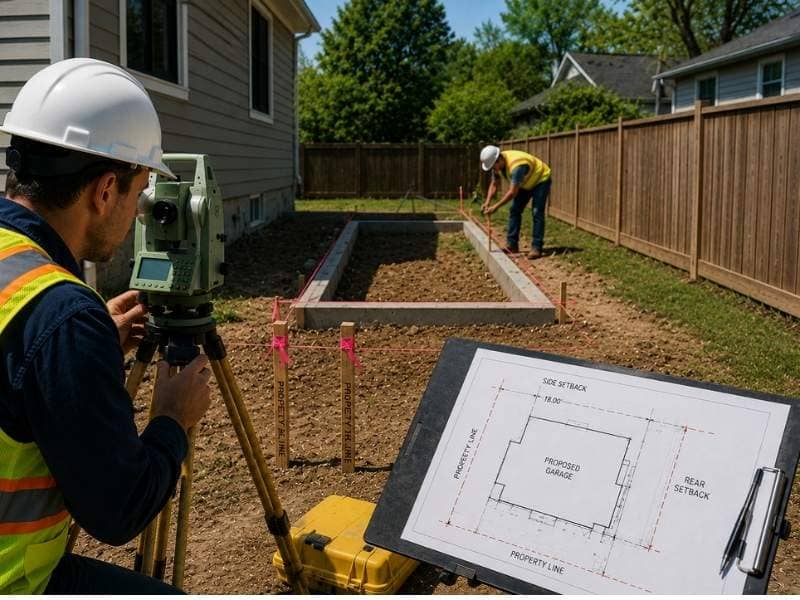
A new garage goes up eighteen inches from a side property line. Nobody notices until the neighbor calls the city. A construction survey could have caught this before the first post hole was dug. This kind of survey marks exactly where a lot ends. It also shows how close a new structure can legally sit to that edge. Skipping it can turn a simple build into a permit problem. Getting it done early keeps a project moving instead of stalling it.
A Construction Survey Helps Show How Close You Can Build
Every lot has rules about how close a structure can sit to its edges. These rules are called setbacks. They change based on the type of structure and the local zoning. A construction survey gives builders the exact distance from each boundary line. Builders get this number before any digging starts. Without it, a builder might guess instead. The guess often comes from an old fence or a faded property marker. That guess can be wrong by a foot or more. A construction survey replaces the guess with a verified number.
Fixing a Mistake Is Harder After Building Starts
A foundation poured two feet too far over a line is a real problem. It cannot just get nudged back into place. Crews have to break it up, haul it away, and start over. That kind of fix costs far more than the survey would have. A construction survey gives the crew exact points to build from. Crews get these points before any concrete gets mixed. Catching a placement error on paper takes minutes. Catching it after the pour takes days and a demolition crew.
Inspections Go More Smoothly When the Layout Is Correct
A building inspector shows up with the approved site plan in hand. The first thing checked is whether the foundation sits where the plan says it should. A construction survey gives the crew marked points to build from at every stage. This keeps the layout matching the plan when the inspector arrives. When the numbers line up, the inspection moves fast. When they do not, the inspector can issue a stop work order. Work stops until someone fixes the problem.
Small Projects Near a Property Line Need Careful Measurements
A storage shed going up eight feet from a back fence still has to follow setback rules. It does not matter that the job feels small. So does a driveway extension or a detached carport near the side yard. A construction survey confirms the real boundary line. It is not the fence line or a line a neighbor once mentioned. Skipping the survey on a small project can still mean a forced move later. A shed that has to shift two feet costs time and money either way.
Builders Can Start With More Confidence When Measurements Are Ready
A crew can start digging the same day. This happens when stakes and flags are already in the ground. A crew without them spends the morning measuring and guessing instead. That time comes out of the actual work. A construction survey gives contractors the exact points to follow. They get this starting on the first day on site. This keeps permit reviews and inspections moving. Nothing stalls on a question nobody can answer on the spot. Builders who start with solid measurements run into far fewer surprises down the line.
Frequently Asked Questions
Why should I get a construction survey before building?
A construction survey marks the exact spot where a new structure belongs. It does this before any work starts. This step helps builders avoid a placement mistake that costs far more to fix later.
Can a construction survey help with permits?
Yes, a construction survey provides the measurements that permit reviewers check against setback and zoning rules. It gives the reviewer a verified record instead of an estimate. This often helps a permit application move through review faster.
Do I need a construction survey for a detached garage or shed?
A small structure built close to a property line can still run into setback problems. A construction survey confirms the real line before the shed or garage goes up. This step is often worth it, even on a project that feels too small to need one.
What happens if a building is placed too close to a property line?
The owner usually has to apply for a variance. Or the structure has to move to fix the problem. In some cases, the city can require the structure to come down entirely.
When is the best time to get a construction survey?
The best time is before excavation starts. Changes are still cheap and easy to make at that point. Getting the survey done early keeps the whole project on schedule.
