
Construction Staking Survey for New Projects
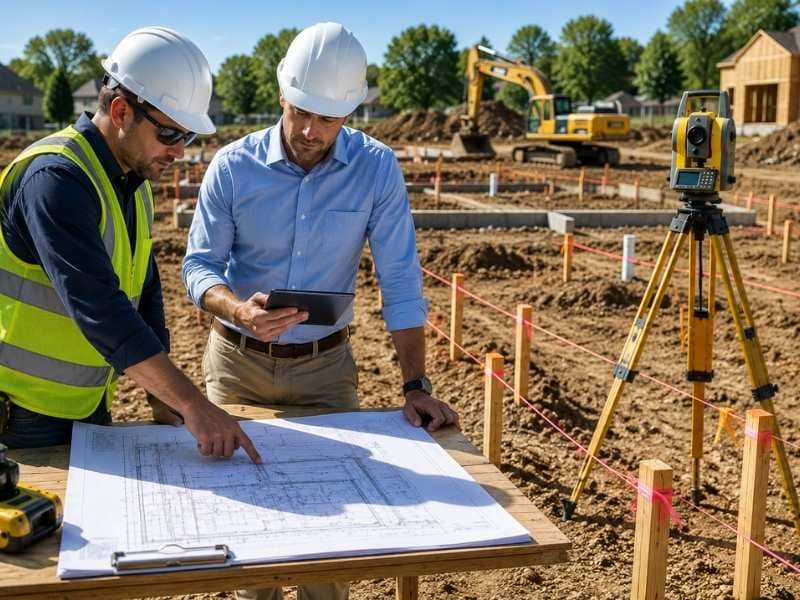
A construction staking survey turns design plans into real reference points on the ground. Before any digging, foundation work, or pipe installation begins, a licensed surveyor places physical markers across the site to guide the whole building process. Those marks tell workers exactly where to build, how high to build, and how everything lines up with the approved plan.
Whether the project is one building or a large development, knowing what a construction staking survey does helps builders, developers, and property owners keep projects accurate and on time.
How a Construction Staking Survey Transfers Design Plans to the Field
Design plans exist on paper or in computer files. A construction staking survey moves that information onto the actual ground. Surveyors use coordinates from the design plans and connect them to fixed reference points already set up on or near the site. From there, they figure out and mark the exact positions of buildings, roads, and utility lines.
Each stake placed on the ground stands for a specific point from the design. The surveyor writes notes on each stake so the crew knows what the mark means and how to measure from it. A corner stake for a building foundation shows the crew exactly where that corner belongs based on the approved plan.
This process has to be precise. A small mistake here can affect the whole project. That’s why surveyors check their work against fixed control points before marking anything for the crew to use.
Why Accurate Layout Information Matters Before Digging Begins
Digging is one of the hardest parts of construction to undo. Once ground gets removed or disturbed, putting it back takes time and money. Getting the layout right before work starts prevents most of that trouble.
Accurate staking before digging helps avoid:
- Foundations dug in the wrong spot or at the wrong depth
- Grading that sends water toward a building instead of away from it
- Utility trenches that run into planned building areas
- Structures placed too close to property lines or required setback distances
A foundation in the wrong place usually can’t be moved. It either gets torn out and rebuilt, or the whole design gets changed around it. Neither choice is fast or cheap. Correct staking before digging removes most of those risks before construction even starts.
Understanding the Different Types of Stakes Used During Construction
Not all construction stakes do the same job. Different markers guide different parts of the work, and knowing what each one means helps crews use them the right way.
Common stake types used during construction include:
- Offset stakes: placed a set distance away from the actual feature so they don’t get knocked over during digging. The crew measures them to find the true spot.
- Grade stakes: show the height the crew needs to reach for grading, base layers, or finished surfaces.
- Alignment stakes: mark the center line of a road or utility line to guide direction and placement.
- Cut and fill stakes: tell the crew how much material to dig out or add at a given spot to reach the planned grade.
Each stake has written information on it. Crews use that information to work correctly without needing the surveyor standing there at every step.
How Staking Surveys Support Efficient Project Coordination
Construction projects have many crews working at the same time. Grading, foundation, utility, and framing teams all need to stay lined up with the design. A construction staking survey gives everyone the same reference system to work from.
When all crews measure from the same set of checked control points, the chance of one part of the project drifting out of place drops a lot. A foundation placed correctly lines up with the utility connections that come after it. A road alignment staked from the same control points connects to the surrounding lots without gaps or problems.
When plan changes happen during construction, updated staking keeps the field work matched to the current design. When questions come up about a position or height, the surveyor can check it quickly before work keeps going in the wrong direction.
Preventing Costly Errors Through Ongoing Verification
One round of staking at the start of a project isn’t always enough. Equipment knocks over stakes. Grading work disturbs reference points. New phases of work begin that need their own layout marks.
Ongoing checks throughout the project catch problems before they get built into permanent structures. A check before concrete gets poured confirms that the forms sit in the right spot. A grade check before paving confirms that the base layer reaches the correct height. These quick field checks cost far less than fixing mistakes after the work is done.
The best approach is to plan checks at key points during construction: before digging, before foundation pours, before utility connections, and before any phase where a layout mistake would be hard or expensive to fix. That schedule keeps the project on track without adding much extra cost.
Frequently Asked Questions
What is a construction staking survey?
A construction staking survey places physical reference points on a site to guide the location and height of planned improvements based on approved design plans.
When should a construction staking survey be done?
Construction staking is done before digging starts and gets updated throughout the project as new phases begin and site conditions change.
What types of projects need a construction staking survey?
Buildings, roads, utilities, subdivisions, and most other development projects need construction staking to keep improvements in the correct position.
Who does a construction staking survey?
Licensed land surveyors perform construction staking surveys and give contractors and builders the layout information they need on the job site.
Why is a construction staking survey important?
It makes sure improvements get built in the correct spot and at the right height, which reduces the risk of mistakes, delays, and costly fixes during and after construction.
