
Property Survey Cost Factors for Large Rural Tracts
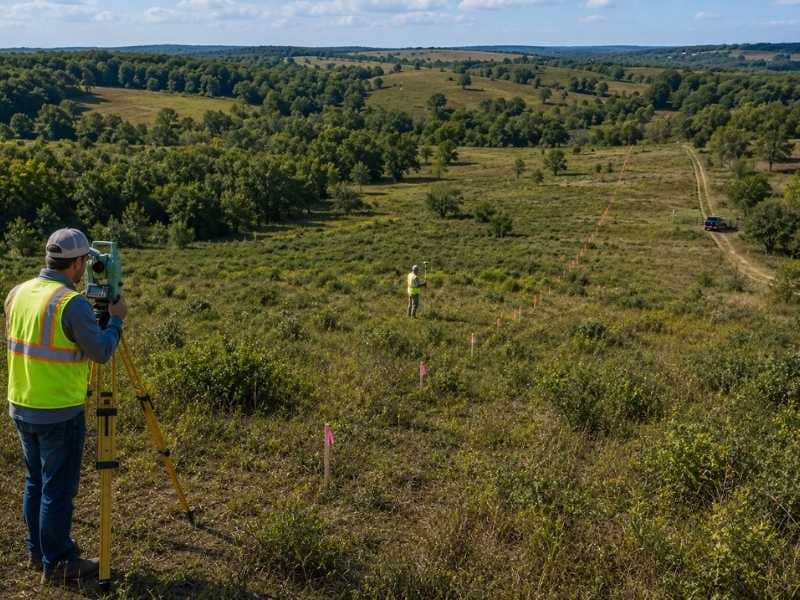
Property survey cost can swing a lot when the land is large and rural. A small city lot is quick to measure, but a big country tract is a different job. More acres, rougher ground and older records all add time. And time is what drives the price of a survey. Knowing the main cost factors helps you plan a budget and avoid surprises.
Why Large Rural Tracts Cost More to Survey
A property survey on rural land asks more of the surveyor than a typical lot does. The crew has to cover far more ground, often on foot, to reach every corner. Many rural parcels also sit in woods or fields with no clear edges to follow. All of that adds hours, and hours are the heart of the bill.
City lots tend to be small, square and well documented. Rural tracts break most of those rules. They can be huge, oddly shaped and tied to records that are decades old. Each of those traits pushes the cost up in its own way.
How Acreage and Boundary Length Affect the Price
Size is the first thing that shapes a survey price, but acreage alone doesn’t tell the whole story. What really matters is the length of the boundary the crew must walk and measure. A long, winding perimeter takes more time than a short, neat one, even at the same acreage. So the shape of the tract can matter as much as its size.
The number of corners adds to that. Every corner is a point the surveyor has to find or set, and each one takes work. A tract with many bends and turns has more corners to handle. More corners and more boundary length both mean more field hours and a higher cost.
Terrain, Brush and Access on Rural Land
Field conditions can change a survey price as much as size does. Thick woods, tall brush and swampy ground all slow the crew down. They may have to cut sight lines through trees just to take a measurement. Rough or steep land makes every step harder and the work longer.
Getting to the land matters too. A tract far from a road, behind a locked gate or across a creek takes extra effort to reach. The crew may need special vehicles or long hikes to carry their gear in. The harder the access, the more time the job eats, and that shows up in the final price.
Old Records and Missing Corner Markers
Rural land often comes with messy paperwork, and that adds research time. Deeds written long ago may use vague descriptions, like a tree or a rock that’s no longer there. The surveyor has to dig through old records to piece the true boundary together. That research can take real hours before anyone steps onto the land.
Missing markers make it harder still. Crews set many rural corners decades ago, and time may have buried or destroyed them. When a marker is gone, the crew has to rebuild its location from the records and nearby evidence. Deed gaps or overlaps with a neighbor’s land can stretch the work even more.
What You Can Do to Keep Survey Costs Reasonable
You can’t change the size of your land, but you can take a few steps that help. A little prep makes the surveyor’s job smoother and can trim the hours.
A few things that often help:
- Gather your deed, title work and any old surveys before you call
- Clear or point out access routes and locked gates ahead of time
- Mark any corners or pins you already know about
- Tell the surveyor what the survey is for, so the scope fits
- Ask for a written estimate that lists what’s included
None of these are magic, but together they cut wasted time. They also help the surveyor give you a fair, accurate quote up front. Clear information at the start is the simplest way to keep a rural survey on budget.
Frequently Asked Questions
What affects the cost of a property survey?
The main factors are the size of the land, the length and shape of the boundary and the field conditions. Old or unclear records add research time, which adds cost. Harder access and missing corner markers raise the price too.
Why do rural surveys cost more than city lots?
Rural tracts are usually much larger and harder to move across. Woods, brush and rough terrain slow the fieldwork down. Their records are often older and less precise, which means more time spent researching the true line.
Does the number of acres set the price?
Acreage matters, but it isn’t the only thing. A long or winding boundary can cost more than a larger tract with a simple shape. The number of corners and the field conditions count just as much.
Can I lower my survey cost?
You can help by doing a little prep. Gather your records, point out access and mark any corners you know. That saves the crew time and supports a more accurate quote.
Why does a surveyor need old deeds and maps?
Those papers describe where your boundary is supposed to run. The surveyor compares them to what’s on the ground to find the true line. On rural land with vague old records, that step takes extra care and time.
