
How a Topography Survey Helps Explain Runoff Before a Site Plan Is Final
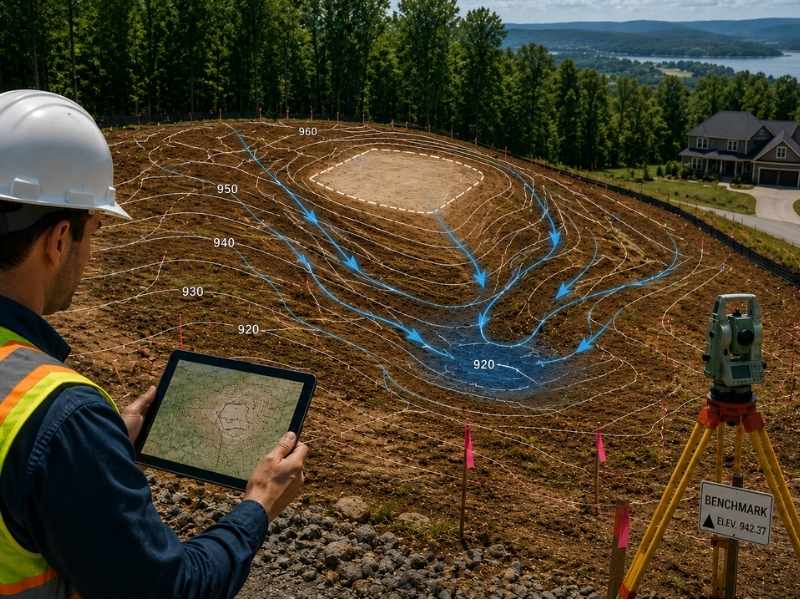
A topography survey shows the shape of the land by measuring how high the ground is at many spots across a property. Those numbers get turned into a map that shows hills, slopes, flat areas, and low spots. When a builder needs to send in a site plan for approval, this survey gives them a clear picture of how the land looks before any choices about buildings or drains are made. Getting this information early helps avoid big changes later.
What a Topography Survey Shows
A topography survey records how high the ground is at many spots across a property. Those spots get connected to show where the land goes up and where it goes down. The result is a map with lines that show the shape of the site. High ground, low spots, steep slopes, and flat areas all show up on the map with real numbers.
This is often shown using contour lines, which are commonly explained in GIS and mapping resources. These lines help visualize how elevation changes across a property and make it easier to understand the shape of the land before any site work begins.
How Runoff Direction Is Determined by Land Shape
Rain water always flows downhill. The way it flows depends on the shape of the ground. On a site with a clear slope, water moves one way. On a site with hills and low spots, water splits and collects in ways that are hard to guess without real measurements.
A topography survey shows those paths. By mapping the height across a full property, the survey shows where high spots send water and where low spots collect it. That tells engineers which parts of the site will drain fast and which parts will hold water after rain. Knowing where runoff goes before a plan is drawn means drains can go where they are truly needed.
Why a Topography Survey Helps With Drainage Planning
Local stormwater programs often ask builders to show how a project will handle runoff before a site plan gets approved. These programs work to control floods and keep water from hurting nearby homes and properties. To meet those rules, a builder needs to know how water moves across the site before any work begins.
A topography survey gives that information. It shows the natural flow of water across the land so that engineers can plan drains that work with the way water already moves. When a site plan includes drains placed using topography data, the plan is more likely to pass review the first time. Plans that do not account for natural water paths often come back with requests for changes, which slows things down.
How It Helps Before a Site Plan Is Approved
A site plan that puts buildings on land without looking at where water flows can cause problems during review. If a planned building sits in a low spot where water collects, the plan may need extra drains that were not part of the first design. That kind of change costs more and takes more time when it comes up after the plan is already sent in.
A topography survey gives builders the data they need to put buildings on higher, better-drained ground from the start. When a site plan matches the natural shape of the land, it tends to move through the approval process with fewer problems because the drain design already fits how water will actually move on the site.
How a Topography Survey Can Help Prevent Water Problems
Knowing the shape of the land before work starts helps stop three common problems: flooding in low spots, standing water near buildings, and soil washing away on slopes. Each of these is easier and less costly to fix during the planning stage than after the work is done.
A topography survey finds the low spots where water collects, the slopes where water runs fast enough to wash away soil, and the flat areas where water may sit after rain. With that information, builders can raise floor heights above low areas, add drains before water has a chance to pool, and protect slopes from washing away. The survey gives everyone on the project the facts they need to deal with water problems before they show up on a finished site.
Frequently Asked Questions
What does a topography survey show?
A topography survey shows the shape, slopes, and height of the land across a property. It records how high the ground is at many spots and turns that data into a map so builders, engineers, and planners can see how the land goes up and down before making any design choices.
Why is runoff important?
Runoff is the water that moves across the ground during and after rain. Where it goes depends on the shape of the land. When builders know where runoff goes on a site, they can put drains in the right spots and place buildings away from areas where water collects.
Who needs a topography survey?
Builders, engineers, and site planners use topography surveys before they start construction. The survey is especially helpful when a project needs to meet local stormwater rules or when a site plan has to show how water will be handled before it gets approved.
How does it help with building plans?
A topography survey shows where high ground, low areas, and slopes are on a property. That helps designers put buildings on ground that drains well, route drains to the right spots, and avoid placing structures where water naturally pools. Plans made with topography data tend to go through review with fewer problems.
Can it help prevent flooding?
Yes. A topography survey shows the low spots on a property where water is most likely to collect after rain. With that information, builders can raise floor heights above those low spots, add drains to carry water away, and make sure the finished site does not hold water near buildings.
