
Your neighbor just knocked on the door. Your new fence is six inches onto their property. Now they want it moved.
This happens more than most people expect. A fence built on the wrong side of your property boundaries creates legal problems, neighbor conflicts and real costs. The fix is almost always more expensive than the survey would have been.
Here’s what you need to know before the first post goes in the ground.
The Short Answer
Yes. You need a survey before installing a fence, especially if you don’t have current, verified markers showing exactly where your property lines are.
Assuming you know where your lines are based on a deed or a rough estimate is a gamble. Property corners shift over time. Old markers disappear. Deeds describe boundaries with language that’s easy to misread in the field.
A property line survey gives you exact measurements you can trust.
What Can Go Wrong Without a Survey
Neighbor Disputes
A fence placed even a few inches over a property line gives your neighbor legal grounds to demand removal. Some neighbors don’t say anything for years. Others call an attorney within days.
Once a dispute starts, you pay for it whether you’re right or wrong. Attorney fees, survey costs and the stress of a legal conflict all add up fast.
Forced Fence Removal
If the fence sits on a neighbor’s property, a court can order you to remove it. You pay for the removal. You pay for reinstallation in the correct location. And you still need the survey you skipped at the start.
Removing and reinstalling a fence can cost $5,000 or more depending on the size and material. That’s on top of whatever you already spent on the original installation.
Easement Conflicts
Property lines aren’t the only issue. Utility easements, drainage easements and access easements run through many residential lots. A fence built inside an easement may need to come down the moment a utility crew needs access to their line.
Easements don’t always appear on older plats or in deed descriptions. A current survey identifies them before you build.
What a Property Line Survey Confirms Before You Build
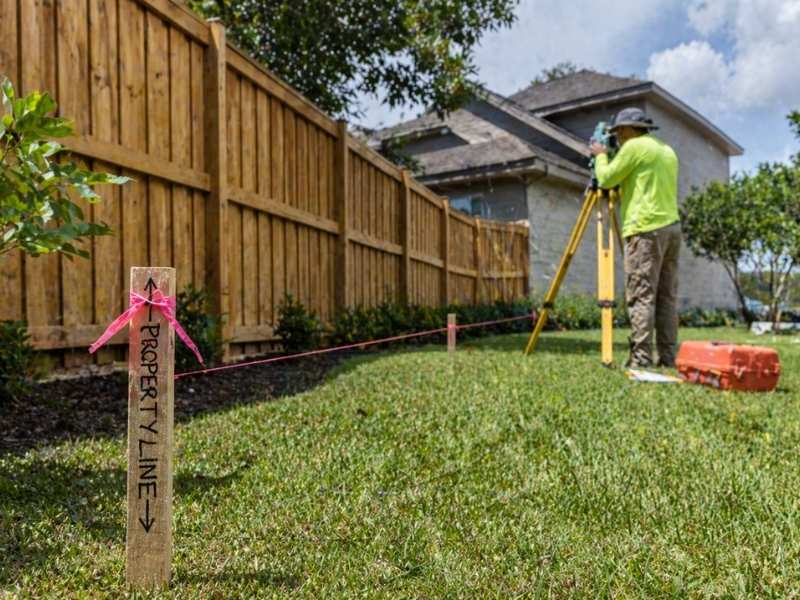
A licensed land surveyor visits the property and locates the exact corners of your lot. They base that work on the recorded deed and plat. They place or confirm physical boundary markers at each corner.
The survey shows you:
- The exact location of all property lines on the ground
- How far the fence can legally go on each side
- Whether any easements cross the lot
- Where existing improvements sit relative to the lines
- Any encroachments already present from neighboring properties
With that information, your fence contractor knows exactly where to work. No guessing and no assumptions.
When a Survey Is Most Important for Fence Installation
Not every fence project carries the same risk. Some situations make a survey especially important.
Get a survey before installing a fence when:
- You’ve never had a survey done on the property
- The lot corners have no visible markers
- The lot is irregular, sloped or has unclear boundaries
- The fence will run along a shared line with a neighbor
- The property was recently purchased and the prior survey is old
- You plan to install a permanent or high-value fence material like iron or brick
If you already have fresh survey stakes and a recent certified survey, you may be able to use that information. But confirm the markers are still in place before you start digging.
What Local Permits and HOAs Require
Many local governments require a fence permit before installation. Some of those permit applications ask for proof of property lines or a copy of the survey plat.
Check with your local permit office before you start. Requirements vary by county and municipality. Some jurisdictions require a site plan showing where the fence will sit relative to the property lines before they approve the permit.
HOA communities add another layer. Many HOA rules restrict fence height, material and placement. Some require written approval before installation begins. Getting the survey first gives you the documentation you need for both the permit office and the HOA.
What the Survey Costs vs. What You Risk
A residential property line survey typically costs between $300 and $700. The price depends on lot size, terrain and how much research is needed to locate the original boundary records.
Compare that to:
- Fence removal and reinstallation: $3,000 to $10,000 or more
- Attorney fees for a boundary dispute: $1,500 to $5,000 or more
- Court costs if the dispute goes further
The survey is the cheaper option by a wide margin. Most homeowners who skip it and run into a problem say the same thing afterward: they wish they had just ordered the survey first.
One more thing. A survey protects more than just your fence project. It confirms your property lines for any future improvement, sale or dispute. That value doesn’t expire after the fence goes up.
Frequently Asked Questions
Can I use my deed to figure out where my property lines are?
A deed describes your property boundaries in words, but those words don’t tell you where the lines are on the ground. Turning a deed description into physical locations requires measurements and surveying equipment. A licensed surveyor does that work. Reading the deed yourself won’t give you the precision you need before building a fence.
What type of survey do I need for fence installation?
A property line survey or boundary survey is what you need. This type of survey locates the corners of your lot and places or confirms physical markers at each one. It gives your fence contractor the ground-level information they need to place the fence in the right location.
What if my neighbor already has a survey?
Your neighbor’s survey was prepared for their property. It may not include the precise corner locations for your lot. Get your own survey from a licensed land surveyor. Don’t rely on a neighbor’s documentation to make decisions about your own property lines.
Does a survey guarantee no problems with my neighbor?
A survey gives you certified documentation of where your property lines are. If you build the fence within your lines based on that certified survey, you have a legally defensible record. That doesn’t guarantee a smooth relationship with your neighbor, but it gives you strong protection if a dispute ever comes up.
How do I find a licensed land surveyor?
All states require land surveyors to hold an active professional license. Ask to see the surveyor’s license number and verify it through the state licensing board before hiring. Get a written quote and a clear description of what the survey includes before any work begins.
