
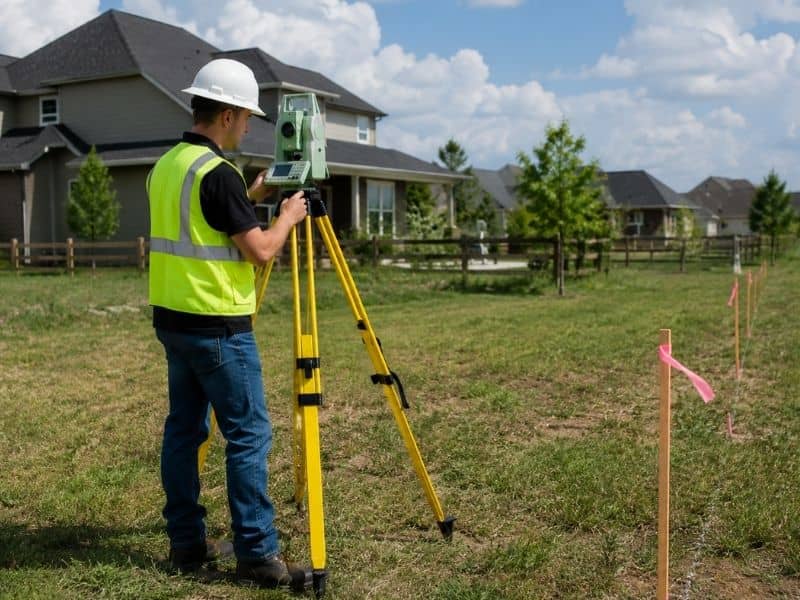
If you are planning to buy land, build on your property, or settle a boundary question, one of the first things you want to know is how much a land survey will cost. The honest answer is that it depends on several factors, but most homeowners pay between $500 and $1,500 for a standard residential survey.
What Affects the Cost of a Land Survey?
No two properties are exactly alike, and that is why survey prices vary. Here are the main factors that push the price up or down.
Size of the property. Larger parcels take more time to measure and document. A quarter-acre city lot costs far less to survey than a 10-acre rural tract.
Shape and complexity. A simple rectangle is quick to survey. An irregularly shaped lot with multiple corners, curves, or cutouts takes significantly longer.
Terrain and vegetation. Flat, open land is easy to work on. Dense woods, steep slopes, or overgrown areas slow the fieldwork and add hours to the job.
Age and condition of existing records. If the property has been surveyed recently and good records exist, the surveyor spends less time on research. Older properties with vague deed descriptions or missing records take longer to piece together.
Location. Urban areas tend to have more complete records and shorter travel times. Remote rural parcels often cost more because of distance and limited historical data.
Type of survey needed. A basic boundary survey costs less than a full ALTA survey or a topographic survey. Knowing which type you actually need helps you avoid overpaying.
Cost by Survey Type
Different surveys serve different purposes and come at different price points.
| Survey Type | Typical Cost Range | Common Use |
| Boundary Survey | $500 to $1,500 | Buying land, fence lines, permits |
| Topographic Survey | $1,000 to $2,500 | Construction and drainage planning |
| ALTA Survey | $2,000 to $5,000+ | Commercial real estate transactions |
| Construction Staking | $500 to $1,500 | Placing buildings and structures |
| Subdivision Survey | $2,000 to $10,000+ | Splitting a parcel into smaller lots |
| Flood Elevation Certificate | $300 to $800 | Flood insurance requirements |
These are national averages. Prices in your area may be higher or lower depending on local demand and the complexity of your specific property.
Residential vs. Commercial Surveys
For a standard residential lot in a recorded subdivision, most homeowners pay on the lower end of the range. The records are usually easy to find, the lot is small, and the work is straightforward.
Commercial surveys cost more for several reasons. Lenders often require a full ALTA survey, which involves additional research, liability coverage, and coordination with the title company. A commercial ALTA survey on a mid-sized property can easily run $3,000 to $6,000 or more.
Is It Worth the Cost?
A land survey might feel like an added expense, especially when you are already dealing with closing costs, permits, and construction budgets. But consider what you are protecting.
A boundary dispute that ends up in court costs an average of $10,000 to $15,000 in legal fees alone, and that does not include the cost of removing or relocating a misplaced structure. A flood insurance dispute or permit rejection can delay a project by months.
One survey done early eliminates most of those risks entirely.
How to Get an Accurate Quote
The best way to know what your survey will cost is to contact a licensed land surveyor directly. When you call, have the following information ready:
- The property address and approximate size
- What you plan to use the survey for
- Whether a previous survey exists and how old it is
- Any known issues such as neighbor disputes or unclear deed language
A reputable surveyor will give you a written estimate before any work begins. Be cautious of quotes that seem unusually low as they sometimes reflect shortcuts in research or fieldwork that can cause problems later.
FAQ
Does the cheapest quote mean the worst quality?
Not always, but price differences usually reflect differences in research depth and equipment. Ask what is included before deciding.
Can I negotiate the price?
You can ask, but licensed surveyors set rates based on actual time and liability. Significant discounts are rare and sometimes a red flag.
Who pays for the survey, the buyer or the seller?
In most real estate transactions, the buyer pays for the survey. In some cases it is negotiated as part of the deal.
Does my homeowner’s insurance cover survey costs?
Generally no. Survey costs are an out-of-pocket expense unless tied to a specific insurance claim.
