
As-Built Surveys After Expanding a Manufacturing Facility
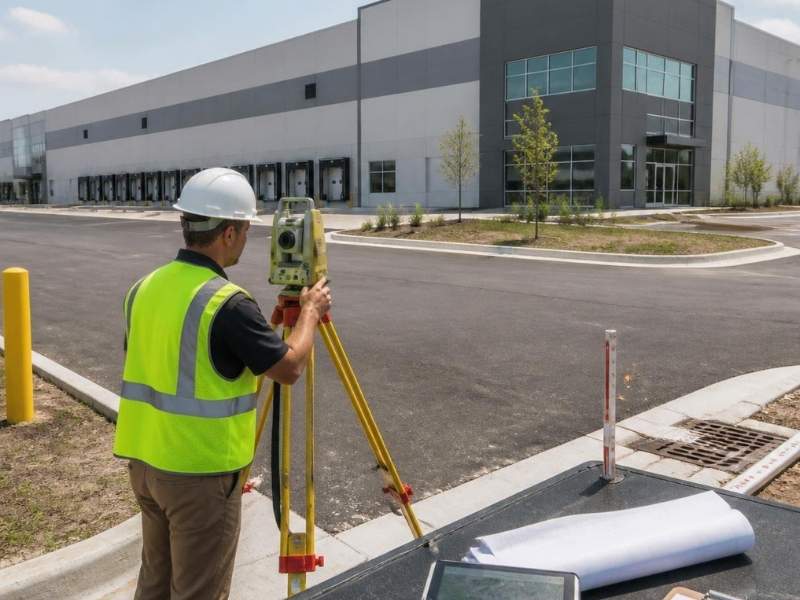
A finished expansion rarely matches the plans down to the inch. Crews adjust on site. A pipe moves. A wall shifts a few feet. Those small changes add up, and no one remembers them all a year later. An as-built survey is how you capture what was truly built. This guide explains what as-built surveys record, why they matter after a manufacturing expansion, and when to order one.
What Changes on a Manufacturing Site After an Expansion
An expansion touches more than the new building. It changes the whole site around it. New pavement, drains, and utility lines all go in. The layout you started with is no longer the layout you have.
Field changes are normal during any large build. A crew hits rock and moves a trench. A utility line takes a new route to avoid a conflict. A dock or drive shifts to fit the real grade of the land. Each change makes good sense on the day, but it drifts from the original plan.
The problem shows up later. Your plans say one thing, and the ground says another. When it’s time for the next project, that gap causes delays and mistakes. An as-built survey closes the gap by recording the site as it stands now.
This matters more on a working plant. Downtime is costly, and surprises are worse. Knowing exactly what’s in the ground helps you plan the next move with less risk.
How an As-Built Survey Captures the Facility as It Was Actually Constructed
An as-built survey is a record of what was really built. A surveyor measures the finished site and maps it in detail. The result shows the true location of buildings, utilities, and site features.
The survey covers both what you see and what you don’t. Above ground, it records building corners, drives, parking, and grades. Below ground, it captures utility lines, drains, and structures where that information is available. Together they give a full picture of the finished project.
Here is what an as-built survey often includes.
- The exact footprint and location of new and existing buildings.
- Paving, curbs, loading areas, and site improvements.
- Utility lines, drainage, and connection points.
- Finished ground elevations and grading.
This record is measured, not guessed. That’s what sets it apart from a marked-up plan set. Marked-up plans show intent, while as-built surveys show fact. For a manufacturing site, that difference protects your next decision.
Why New Building Connections and Site Improvements Need Verification
New work has to tie into old work, and that’s where errors hide. A new wing connects to the existing plant. A fresh drain line meets an older one underground. If those connections aren’t verified, a small mismatch can cause a big problem.
Verification confirms that what was built matches what was needed. It checks that utilities connect where they should. It checks that grades carry water away from the building, not toward it. It checks that new improvements sit within your property and clear of easements.
Property lines and easements deserve a close look. An expansion can creep toward a boundary or over a utility easement without anyone noticing. That can block future work or spark a dispute. Rules on setbacks and easements can vary by county, municipality, and project type, so confirm them early.
Catching these issues now is far cheaper than later. A fix on paper costs little, but a fix in poured concrete costs a lot. As-built surveys give you the proof to catch problems while they’re still easy to solve.
How As-Built Data Helps Keep Future Facility Work on Track
A manufacturing site is never truly done. There’s always a next phase, a new line, or a repair. Good as-built data makes each of those jobs faster and safer. It’s the base map every future project starts from.
Think about a crew that needs to dig near a buried line. With an accurate as-built survey, they know where that line sits. They avoid the strike that shuts down production for a day. Without it, they’re guessing, and guessing near utilities is risky.
The same data helps your engineers and planners. They can design the next expansion from real measurements. They can spot conflicts before the work begins. That saves both time and money on every project that follows.
It also helps at sale or refinance time. A buyer or lender wants to know what’s really on the site. Clean as-built records answer those questions fast.
When an As-Built Survey Becomes Important After Construction Is Complete
The best time to order an as-built survey is right after construction wraps. The site is fresh, and the changes are easy to record. Waiting lets details fade and grades settle. An early survey captures the truth while it’s clear.
A few moments make an as-built survey especially useful. Order one when the city or county requires it to close out a permit. Order one before you plan the next phase of work. Order one when a lender, buyer, or insurer asks for proof of what was built.
Timing can affect more than convenience. Permits, occupancy, and financing can all depend on this record. Confirm your survey needs early so a missing document doesn’t hold up your opening. A little planning here keeps the whole project on schedule.
Not every small change calls for a full survey. A minor interior update may not need one. But any expansion that adds buildings, utilities, or site work usually does. When in doubt, ask a surveyor what your project requires.
Frequently Asked Questions
What is an as-built survey?
An as-built survey is a detailed record of what was actually constructed on a site. A surveyor measures the finished buildings, utilities, grades, and improvements after the work is done. It shows their true location, which can differ from the original plans. For a manufacturing site, it gives you an accurate map of the real facility.
How is an as-built survey different from the site plan?
A site plan shows what was designed before construction started. An as-built survey shows what was really built after the work is finished. Field changes during construction often make the two differ in small but important ways. The as-built survey is the one that matches the ground you actually have.
Do I still need an as-built survey if the work matched the plans?
Yes, because few projects match the plans exactly once crews are in the field. Even careful builds include small changes to utilities, grades, or layout. An as-built survey confirms what was done and gives you a record you can trust. It also satisfies permits, lenders, or buyers who ask for proof.
Who uses an as-built survey after it’s finished?
Owners, engineers, and contractors use it to plan and carry out future work. Cities and counties may require it to close out a permit. Lenders, buyers, and insurers may ask for it during a sale or refinance. It becomes a shared reference that many parties rely on for years.
When should I order an as-built survey?
The best time is right after construction is complete, while the site is fresh. You should also order one when a permit, sale, or new phase of work depends on it. Confirm the requirement early, since timing can affect your permit or financing. A surveyor can tell you what your specific project needs.
